

How Surgeons Decide Whether Lung Cancer Is Operable
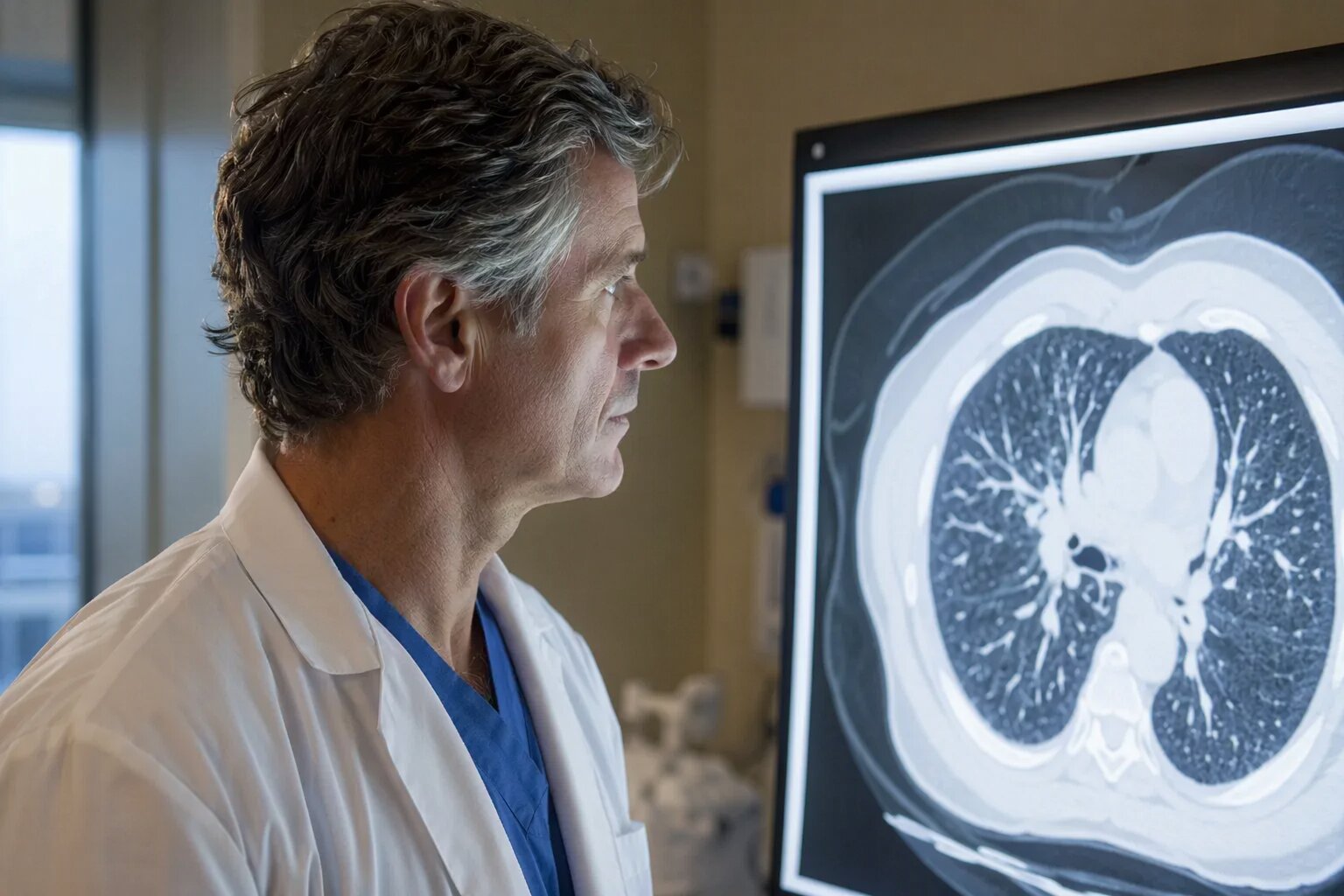
When you’re told you have lung cancer, one of the first big questions is whether surgeons can safely remove it. They look not just at the tumor, but at your lungs, heart, and overall strength. Imaging scans, breathing tests, and even the location of nearby lymph nodes all influence the decision. Sometimes a cancer that looks small isn’t actually operable, and sometimes a larger one still is because…
How Surgeons Decide If Lung Cancer Is Operable
When clinicians consider whether lung cancer is “operable,” they're primarily evaluating two issues: whether the tumor can be completely removed and whether the patient can safely undergo surgery. According to Dr. Marco Scarci, a lung cancer surgeon, this decision requires a careful balance between the characteristics of the cancer and the patient’s overall health, rather than relying on a single test or factor.
To assess whether the cancer is technically resectable, surgeons review imaging studies such as CT scans and often PET scans. These help determine if the tumor is confined to the lung or has spread to structures such as mediastinal lymph nodes, major blood vessels, the chest wall, or other organs. Surgeons evaluate whether they can remove the tumor with clear margins (no visible cancer at the edges of the removed tissue) while preserving critical structures like major airways and vessels.
They also assess the patient’s ability to tolerate surgery. This includes measuring lung function with tests such as spirometry (including FEV1) and, when indicated, diffusing capacity (DLCO). Cardiac evaluation, overall performance status, and the presence of significant comorbidities (such as severe heart disease or advanced chronic obstructive pulmonary disease) are also considered.
Combining these factors helps the team determine if surgery is both technically feasible and medically appropriate. This comprehensive approach allows doctors to weigh potential benefits against risks and select the treatment path that offers the best possible outcome for each patient.
When Lung Cancer Is Usually Operable (By Stage)
By considering the cancer stage, doctors estimate whether lung cancer can be safely and completely removed with surgery.
In Stage I, the cancer is confined to the lung, and surgery alone can often remove all visible disease.
Stage II is frequently still operable, even when nearby lymph nodes are involved; in some cases, chemotherapy is given before or after surgery to reduce recurrence risk.
Stage IIIA is more variable.
Some patients are candidates for surgery, particularly when cancer is limited to certain lymph node areas on the same side of the chest.
In these cases, surgery is often combined with chemotherapy and/or radiation.
Stage IIIB is less often operable because the disease typically involves more extensive lymph node regions or structures in the chest; combined chemoradiation is usually preferred.
Stage IIIC is generally not considered operable, and treatment typically focuses on chemoradiation and systemic therapies such as chemotherapy, immunotherapy, or targeted agents, depending on the tumor’s molecular features.
Individual treatment decisions depend on multiple factors, including tumor size and location, lymph node involvement, overall health, lung function, and patient preferences.
Imaging Tests Surgeons Use To Stage Lung Cancer
Surgeons use several imaging tests to determine whether lung cancer can be safely and effectively removed with surgery. These tests help define the exact location of the tumor, its size, and whether it has spread to lymph nodes or other organs.
Staging usually begins with a CT scan of the chest. CT imaging provides detailed information about the tumor’s dimensions, its relationship to nearby structures, and the appearance of lymph nodes in the chest that may be involved with cancer.
A PET-CT scan is often added to assess metabolic activity. Areas that take up more of the radioactive tracer (“hot” spots) may indicate cancer spread within the chest or to distant sites, which can influence whether surgery is appropriate.
If there's concern that cancer may have spread to the brain—based on symptoms or more advanced stage—an MRI of the brain is typically obtained because it's more sensitive than CT for detecting brain metastases.
When imaging suggests that lymph nodes in the mediastinum (the central area of the chest) might contain cancer, tissue sampling is usually required to confirm this. Common methods include endobronchial ultrasound–guided biopsy (EBUS), which uses a bronchoscope with ultrasound to guide needle sampling of lymph nodes, and mediastinoscopy, a surgical procedure that allows direct sampling of mediastinal nodes.
These procedures provide pathologic confirmation, which is essential for accurate staging and planning treatment.
How Lymph Nodes Affect Lung Cancer Operability
Surgeons evaluate lymph nodes carefully because nodal involvement strongly influences whether surgery can remove all detectable cancer.
- N0 (no regional lymph node metastases): Surgery is often the main treatment and offers the best chance for complete resection, provided the patient’s overall health and lung function are adequate.
- N1 (cancer in lymph nodes inside the lung or near the affected bronchus): Surgery may still be appropriate, but staging is more detailed, and treatment plans frequently combine surgery with chemotherapy (before or after surgery) and sometimes radiation.
- N2 (nodes in the mediastinum on the same side as the tumor) and N3 (nodes in mediastinum or neck on the opposite side, or supraclavicular nodes): The likelihood of cure with surgery alone is low.
In these settings, treatment usually begins with systemic therapy such as chemotherapy or chemoradiation.
Surgery, if considered, is typically part of a multimodality approach rather than the primary treatment.
To reduce the risk of understaging, surgeons and oncologists confirm lymph node status using imaging (CT, PET-CT) combined with tissue sampling.
Common methods include endobronchial ultrasound (EBUS), endoscopic ultrasound (EUS) with needle aspiration, and, when needed, surgical procedures such as mediastinoscopy.
Lung Function Tests and How Fit You Must Be
Before recommending lung cancer surgery, your care team assesses how well your lungs function, not just the tumor. You'll usually have lung function tests that measure:
- FEV1 (Forced Expiratory Volume in 1 second): how much air you can forcefully breathe out in one second.
- DLCO (Diffusing Capacity of the Lung for Carbon Monoxide): how efficiently oxygen passes from your lungs into your blood.
Tests such as spirometry and sometimes body plethysmography (“body box”) are used to measure airflow and lung volumes.
Marked airway narrowing or very low lung volumes can increase the risk of complications from surgery.
You may also be asked to perform exercise-based assessments, such as a stair-climb test or shuttle-walk test, which help estimate how well your heart and lungs cope with physical stress.
Higher FEV1 and DLCO values, along with good performance on exercise tests, generally indicate that surgery is more likely to be tolerated.
Very low values may lead your team to consider modified surgical approaches, more limited operations, or non-surgical treatment options.
Other Health Problems That Can Rule Out Surgery
Even when imaging suggests a lung tumor can be removed, other significant medical conditions may make surgery too risky. Before recommending an operation, surgeons evaluate heart and lung function in detail. Severe coronary artery disease, heart failure, serious heart rhythm problems, or markedly reduced lung capacity on pulmonary function tests or exercise (stress) testing may indicate that a patient is unlikely to tolerate anesthesia, mechanical ventilation, or the recovery period.
The extent of the cancer is also critical. If the tumor has invaded key structures in the mediastinum (such as major blood vessels, the heart, or the esophagus) or has spread to certain lymph nodes or distant sites, surgery is unlikely to be curative and may not be appropriate.
Other conditions that can substantially increase the risk of complications include blood-clotting disorders, marked frailty, poor performance status (limited ability to carry out daily activities), uncontrolled diabetes, serious active infections, and advanced kidney or liver disease. When these problems are severe, the overall risk–benefit balance may favor nonsurgical treatment options instead of an operation.
When Surgeons Advise Against Lung Surgery
Surgeons use the same diagnostic and staging information to decide when surgery isn't appropriate. They typically advise against an operation if imaging shows that the cancer has spread beyond the lung or to mediastinal lymph nodes in a pattern consistent with advanced-stage disease, because removing part of the lung is unlikely to result in cure in that setting.
Surgery may also be ruled out if predicted postoperative lung function (based on measures such as FEV1 and DLCO) is too low to support safe breathing after a resection, or if significant heart disease or other serious medical conditions make anesthesia and surgery high risk.
In addition, if scans indicate that the tumor can't be completely removed, for example, when it surrounds or invades major blood vessels or central airways, surgeons generally recommend non-surgical options, such as radiation therapy, systemic treatments, or combined approaches.
Types of Lung Cancer Surgery
Once your care team determines that lung cancer can be treated with surgery, they select an operation that aims to remove the tumor completely while preserving as much functioning lung tissue as possible.
The most common procedure is a lobectomy, in which an entire lobe of the lung is removed. If the cancer involves a larger portion of the lung or is centrally located, a pneumonectomy (removal of the entire lung) may be necessary.
For very small, early-stage tumors or in people who've limited lung function, a segmentectomy or wedge resection may be considered. These procedures remove a smaller portion of lung tissue and are sometimes referred to as “sublobar” resections.
In many cases, lymph nodes in the chest are also removed (lymph-node dissection or sampling) to determine the cancer stage and guide decisions about additional treatment.
In selected cases where the tumor is located in a central airway, a sleeve resection can be used to remove the tumor and a segment of the airway while preserving more lung tissue than a pneumonectomy.
When feasible, minimally invasive approaches such as video-assisted thoracoscopic surgery (VATS) or robotic-assisted surgery may be used. These techniques generally involve smaller incisions and can be associated with shorter hospital stays and recovery times compared with traditional open surgery, although suitability depends on tumor characteristics and overall health.
Treatment Options When Lung Cancer Isn’t Operable
When lung cancer isn't operable, treatment focuses on controlling the disease, reducing symptoms, and preserving quality of life. Radiation therapy can be used to treat the main lung tumor or areas where the cancer has spread. Approaches may include stereotactic body radiation therapy (SBRT), combined chemoradiation for more locally advanced disease, or palliative radiation to the brain or other sites to relieve symptoms.
Systemic therapy often replaces surgery in these situations. Chemotherapy—commonly using platinum-based combinations—may be given alone or with immunotherapy drugs that help the immune system recognize and attack cancer cells. If molecular testing identifies specific genetic alterations such as EGFR, ALK, ROS1, BRAF, MET exon 14 skipping, or KRAS G12C, targeted therapies can be used. These drugs are designed to block the activity of the altered proteins and may slow tumor growth or shrink tumors.
Supportive or palliative care is recommended early in the course of treatment. It focuses on managing breathlessness, cough, pain, fatigue, weight loss, and other symptoms, and can be provided alongside treatments aimed at controlling the cancer.
Questions To Ask Your Surgeon About Operability
Before deciding on lung cancer surgery, it can be useful to arrive at your appointment with specific questions about how your team determined that surgery is (or is not) appropriate.
You might ask your surgeon:
- What's my exact clinical stage, and how does that stage influence whether surgery is recommended for me?
- Which tests were used to assess my cancer (for example, CT, PET, brain MRI, bronchoscopy, EBUS/EUS, mediastinoscopy), and what did each test show?
- What're my lung function values, including FEV1 and DLCO, and what's my predicted lung function after the proposed surgery?
- Are any mediastinal lymph nodes involved, and how does this affect whether surgery is advisable or feasible?
- What specific operation do you recommend (such as lobectomy, segmentectomy, or pneumonectomy), and what're the reasons for choosing this option over others in my case?
Conclusion
You now know how surgeons decide if lung cancer surgery’s right for you—by looking at the cancer’s stage, your scans, lymph nodes, and how well your lungs and heart work. Use this information to ask clear questions and understand why surgery is or isn’t recommended. No matter the decision, you still have treatment options. Stay involved, speak up about your goals and worries, and work with your team to choose the plan that fits you best.